Inscription intelligence
Recovering structure from carved text.
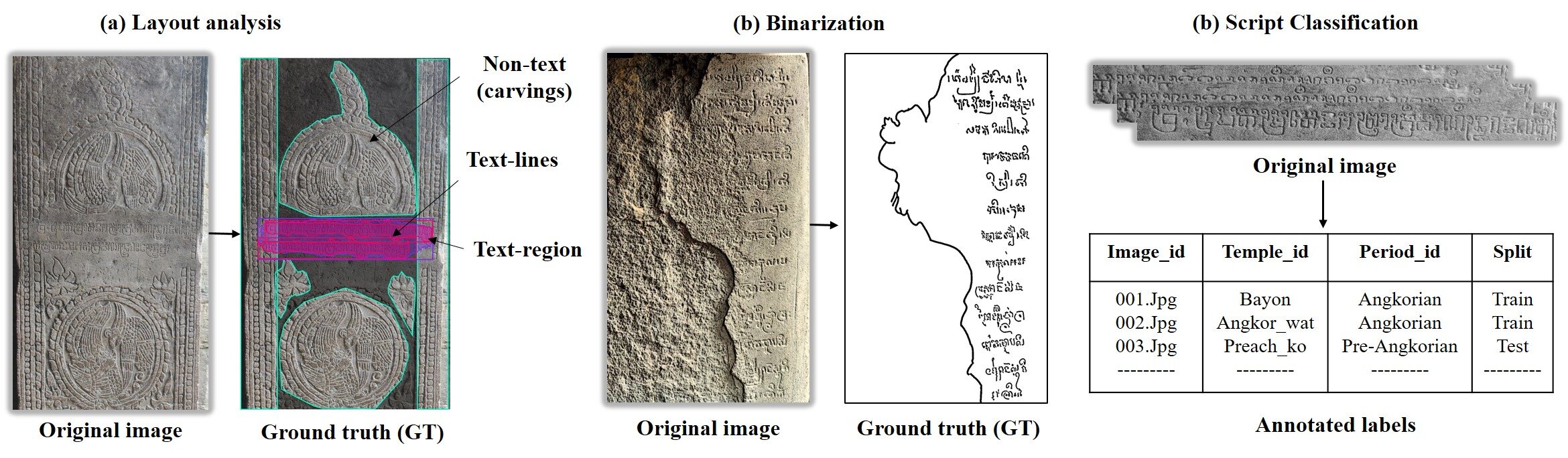
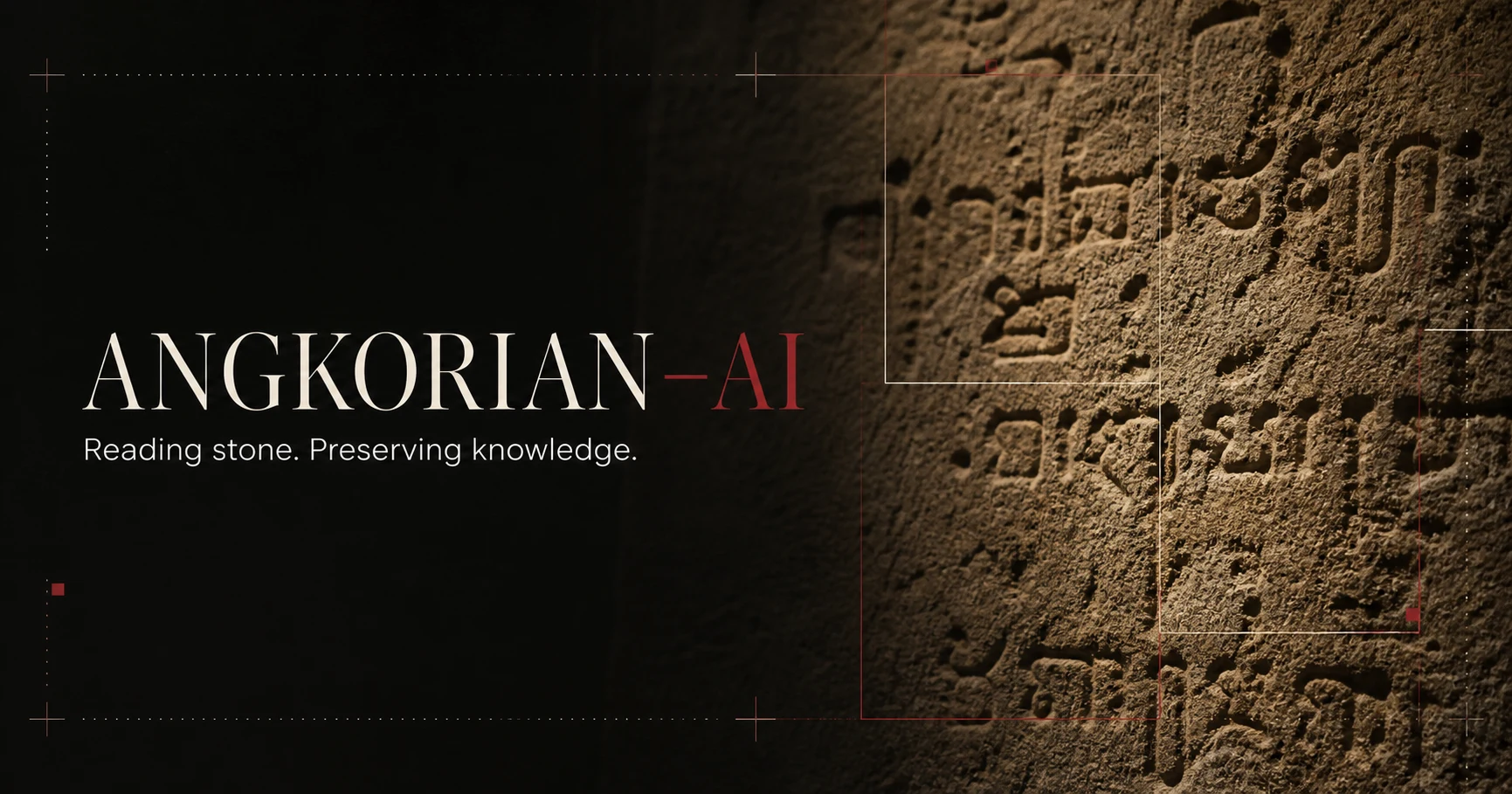
Detect text regions and lines, extract binary text masks, and recognize historical periods across severely weathered Khmer stone inscriptions.
KSI–LAKSI–BKSI–C
Angkorian–AI ProjectJan 2026 — Present
Angkorian–AI advances computer vision for Khmer stone heritage— building datasets, benchmarks, and preservation-centered methods for inscription analysis and visual condition assessment.
Research program / 01
One preservation mission. Two complementary computational views.
Khmer stone surfaces are neither clean pages nor standard objects. Relief-induced shadows, erosion, biological growth, texture, and historical variation shape every task we study.
Inscription intelligence
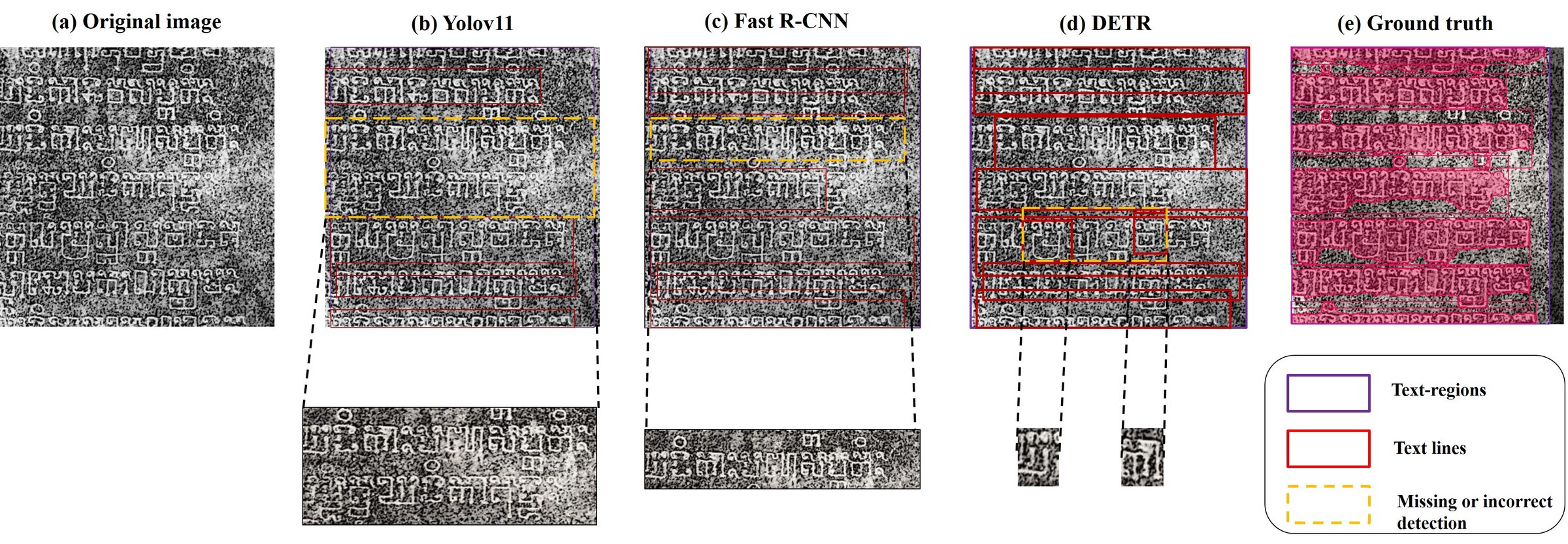
Detect text regions and lines, extract binary text masks, and recognize historical periods across severely weathered Khmer stone inscriptions.
Condition intelligence
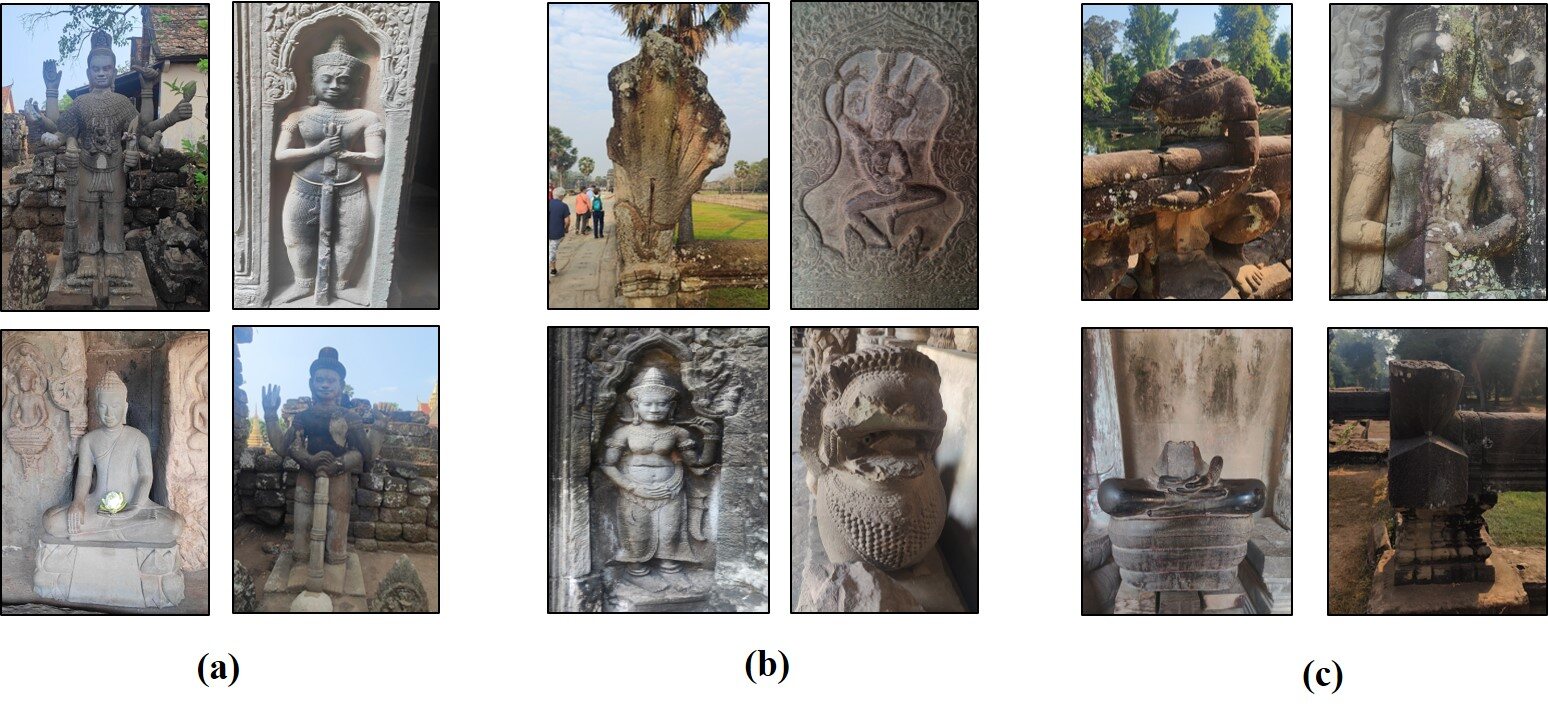
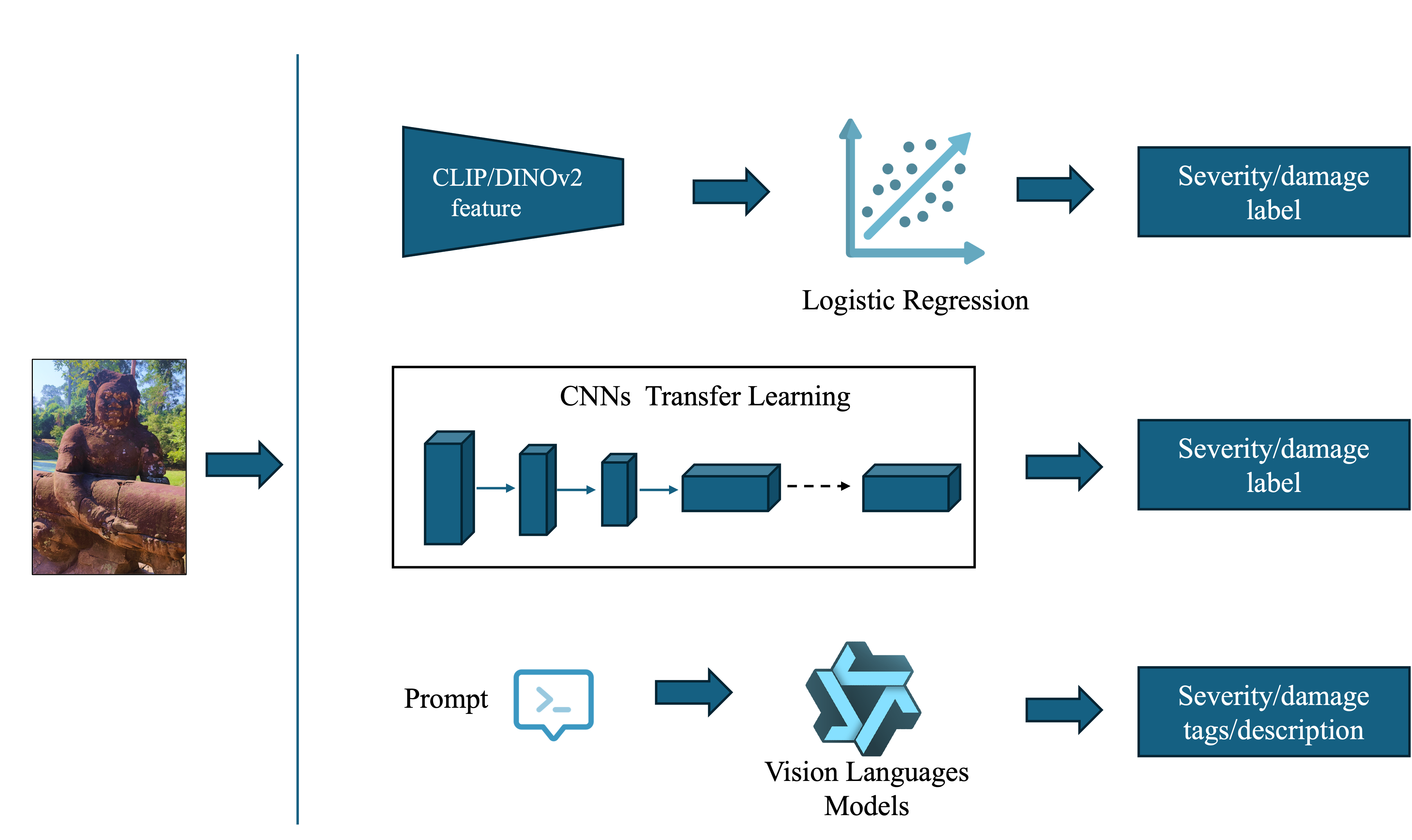
Support expert assessment of stone damage and severity with classification, bounding-box detection, segmentation, and interpretable visual evidence.
Selected publications / 02
Conference proceedings · 2026
Two complementary studies establish the project’s research agenda across historical document analysis and visual condition assessment.
Conference paper · First online 24 Aug 2026
DOI: 10.1007/978-3-032-36039-7_23
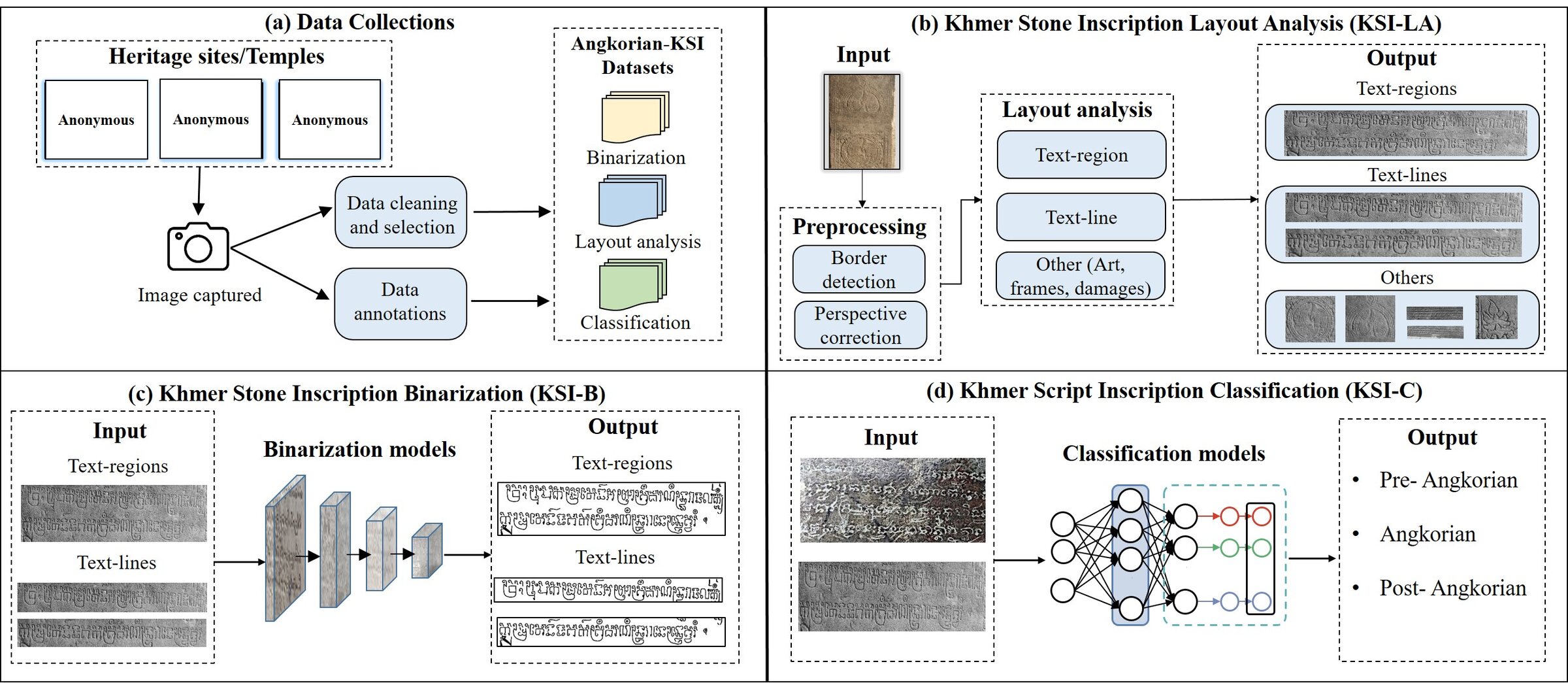
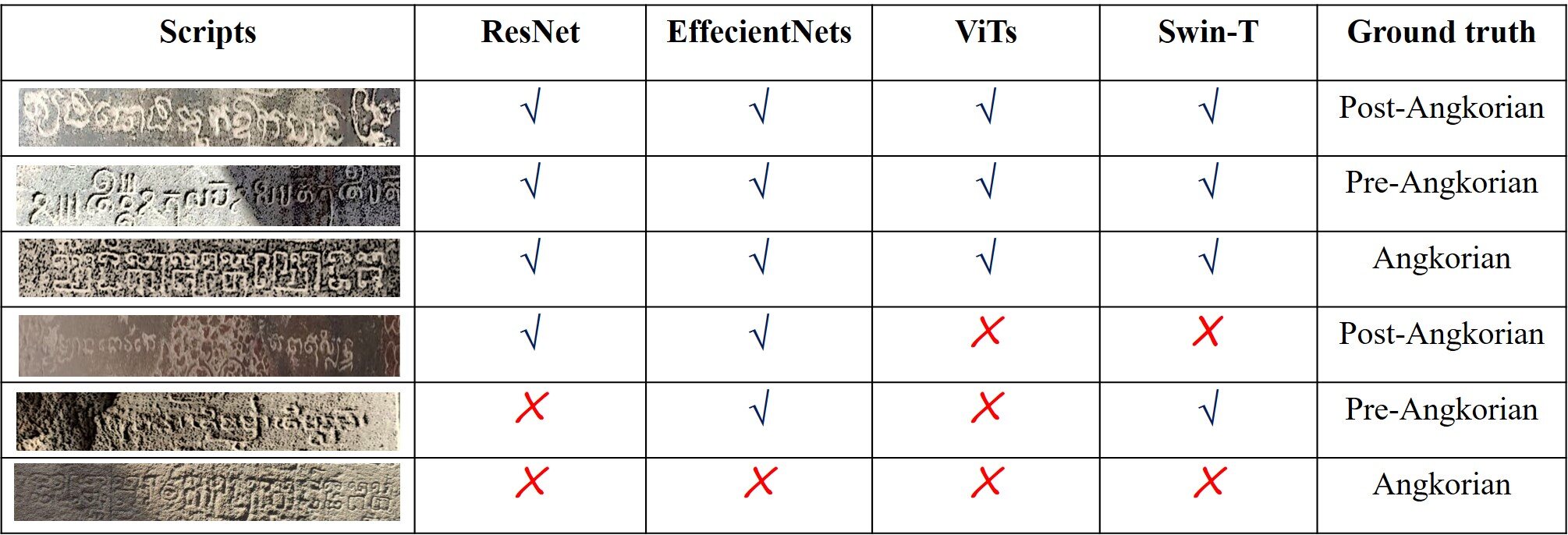
The first benchmark dedicated to automated digital analysis of Khmer stone inscriptions, spanning structural detection, text-mask extraction, and historical period recognition. Baselines expose a pronounced domain gap created by erosion, relief shading, complex stone texture, and linguistic variation.
Conference workshop paper · Aug 2026
ICPR–PRESTIGE Workshop · August 2026
A preservation-oriented study of AI-assisted visual condition assessment for Khmer stone objects, evaluating modern vision architectures against damage severity, surface degradation, and demanding field-capture conditions.
Angkorian-KSI / Benchmark
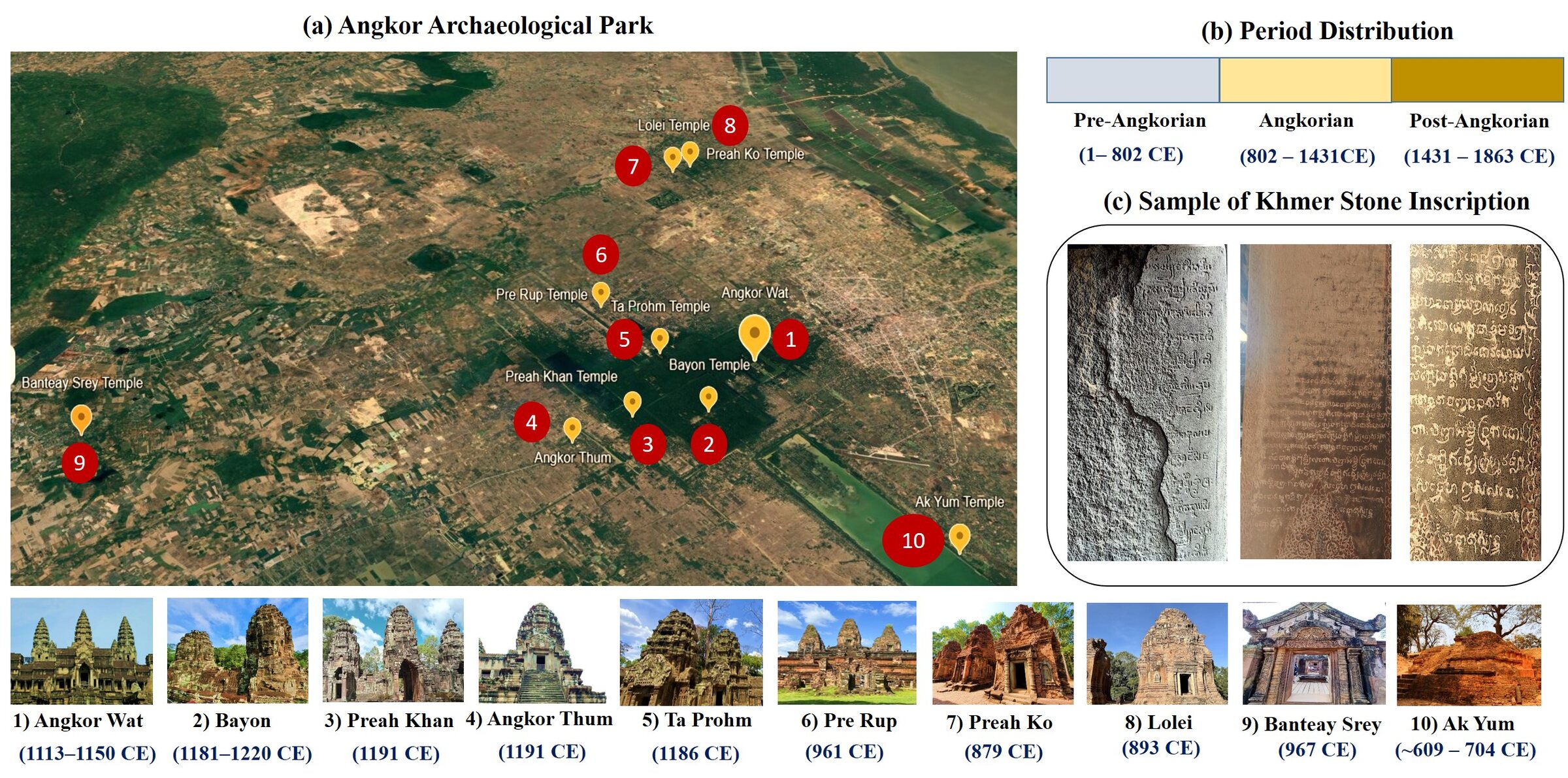
Curated from in situ captures across multiple sites in a UNESCO World Heritage archaeological region, Angkorian-KSI turns field imagery into a coordinated three-task evaluation framework.
View paper details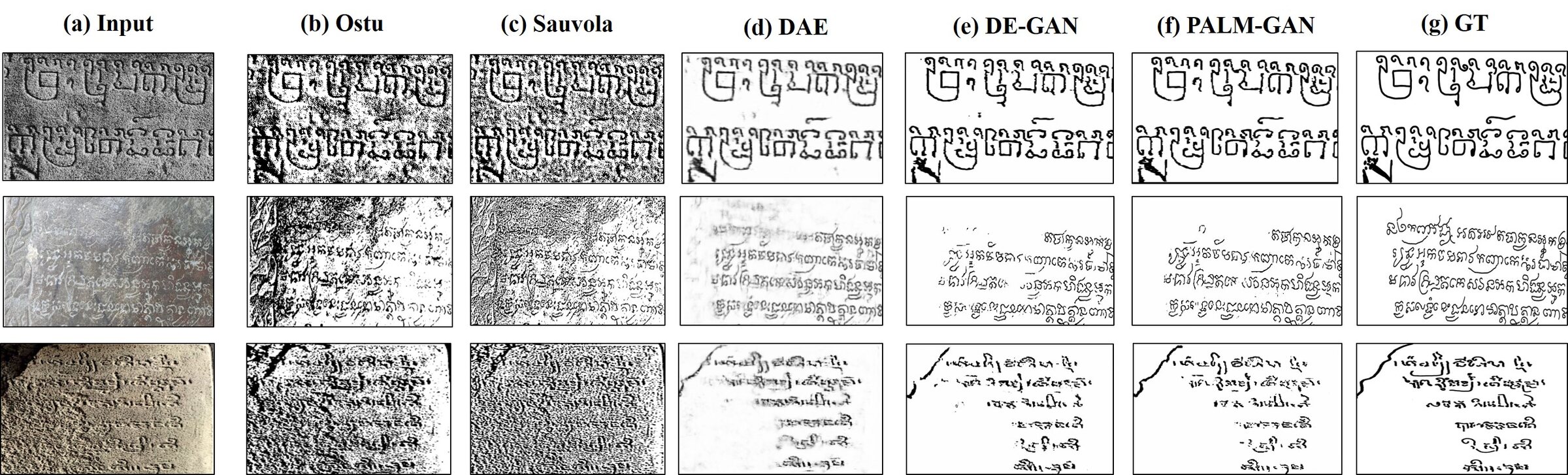
| Resource | Task | Split | Status | Access |
|---|---|---|---|---|
| KSI-B-Small | Khmer stone-inscription binarization | 10 training / 5 test images | Public | Hugging Face ↗ · GitHub ↗ |
Research-use notice: the full Angkorian-KSI benchmark remains restricted to approved, non-commercial cultural-heritage research. KSI-B-Small is provided as a public sample for testing and format inspection.
How we work / 03
A preservation-centered research pipeline
Each stage is designed to keep provenance, uncertainty, and expert review visible.
Capture objects, inscriptions, surfaces, and context under real field conditions.
Clean and structure images with site, period, object, and provenance metadata.
Build detailed polygons, masks, bounding boxes, text lines, and expert-defined labels.
Evaluate modern vision architectures against Khmer stone’s distinctive domain shift.
Translate outputs into inspectable evidence for researchers and heritage specialists.
Inside the research / 04
Severe texture, erosion, lighting, and overlapping carvings test the limits of systems trained on cleaner visual domains.
Project leadership / 05
Applied AI · Historical analysis · Low-resource languages

Project Director · Research Scientist
Dr. Nimol Thuon is a research scientist specializing in applied AI for historical analysis and low-resource languages. For more than a decade, his research has examined multi-script historical manuscripts across South and Southeast Asia, covering 8–10 writing systems and a broad range of low-resource languages. He now leads Angkorian–AI, advancing computational analysis of Khmer stone inscriptions and heritage objects for preservation, documentation, and long-term cultural research.
Partners & supporters
Institutional partnership and research support

Collaboration
We welcome conversations with conservators, archaeologists, epigraphers, museums, Cambodian universities, and computer vision researchers working on preservation-centered methods.
Contact the project